
The Indian rupee fell to a record low against the US dollar due to rising crude oil prices, foreign institutional investor selling, and weak domestic equity market sentiment.

The Central Board of Indirect Taxes and Customs (CBIC) has enabled UPI, debit, and credit card payments for Customs duty on the ICEGATE portal, enhancing ease of doing business for importers and exporters.

The Telangana government's salary structure reveals surprising figures, with senior sweepers earning up to 2 lakh and chief engineers drawing 7 lakh monthly.

The Indian banking system's net liquidity surplus has reached a four-year high of Rs 4.57 trillion, driven by maturing government securities, with further maturities expected to push the surplus to around 5 trillion.

India's net oil import bill could rise by $56 billion to $64 billion annually assuming global crude averages $110 to $115 per barrel in FY27.

The Enforcement Directorate has restored assets worth over 15,000 crore to a Supreme Court-appointed committee for distribution to investors defrauded in the PACL (Pearls Group) Ponzi scheme.
Hyderabad Police Commissioner V C Sajjanar convened a meeting with bankers to address the misuse of bank accounts in cyber frauds and implement preventative measures, following 'Operation Octopus' which dismantled cyber fraud networks and led to arrests of complicit bank officials.

India's unemployment rate for individuals aged 15 and older increased to 5.1 per cent in March 2026, up from 4.9 per cent in February, primarily due to a rise in joblessness in urban areas, according to government data.

Indian benchmark stock indices Sensex and Nifty rallied for the second consecutive day, closing nearly 1 per cent higher, driven by gains in metal and auto sectors and positive global market trends.

OpenAI reports India is a leading AI market with strengths in coding, data analysis, and reasoning, but adoption is heavily concentrated in top cities, highlighting a significant regional disparity.

Amritpal Singh Mehron, the primary suspect in the murder of social media influencer Kanchan Kumari, has been arrested after being deported to India from the Middle East. He was apprehended at Delhi's airport and is now in police custody.

Financial year 2025-26 (FY26) saw a significant shift in corporate fundraising, with rights issues more than doubling to a multi-decade high of 51, raising 44,290 crore, while qualified institutional placements (QIPs) more than halved to 29 issues, mobilising 62,954 crore, driven by sharp equity market corrections and regulatory changes.

Bihar Police arrested 141 people in a state-wide crackdown on mule bank account networks allegedly used for cyber fraud. The operation, 'Cyber Prahar 2.0', led to the registration of 86 FIRs and uncovered collusion by bank employees.

SIS Ltd, a security and facility management services provider, aims to cross Rs 20,000 crore in revenue by FY27, driven by strong double-digit growth, expansion of its service network, and a simplified regulatory framework under new labour codes, said its Group Managing Director Rituraj Sinha.
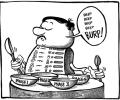
Mumbai hotels and restaurants are facing potential closures due to a critical shortage of commercial LPG cylinders, with similar disruptions reported across India. The crisis stems from revised government priorities for domestically produced natural gas, impacting the hospitality sector and potentially affecting tourism.
The Indian rupee crashed to a record closing low against the US dollar due to rising global crude oil prices, a strengthening dollar, and geopolitical tensions in the Middle East.

SBI General Insurance aims to achieve a 10 per cent market share among private and standalone health insurers within approximately five years, up from its current 7.17 per cent, said Naveen Chandra Jha, managing director and chief executive officer, SBI General Insurance.
A Deloitte report reveals that Indian enterprises are leading the world in large-scale AI adoption, but are facing a significant skills gap in AI expertise.

S&P Global Ratings warns that Indian oil marketing companies like IOC, BPCL, and HPCL may face reduced profit margins due to rising crude oil prices and government pressure to maintain stable retail prices.
Kerala Police arrested 165 people and registered 455 cases in a statewide operation targeting cyber financial fraud, confiscating devices and disrupting criminal networks.

India's unemployment rate saw a marginal decrease in February 2026, according to the Periodic Labour Force Survey (PLFS). The survey highlights changes in urban and rural unemployment rates, as well as labour force participation and worker population ratios.

Rashid Naseem, wanted in India for an alleged investment fraud, has been arrested in Dubai following an Interpol Red Notice and extradition request.

The Reserve Bank of India (RBI) on Tuesday came out with a draft framework on declaration of dividend by banks, as it proposed capping dividend payout to shareholders at 75 per cent of their net profit-- also called profit after tax (PAT).

Analysts are increasingly optimistic about India's capital markets, with HDFC AMC, CAMS, and KFin Technologies identified as top investment picks. This optimism stems from a structural shift in household savings towards financial instruments and an expected multi-year earnings expansion for market infrastructure providers and asset management companies.

India has resumed issuing tourist visas to Chinese nationals through its missions and consulates worldwide, marking a step towards rebuilding ties after the resolution of the eastern Ladakh military stand-off.

Uncertainty stemming from the US-Iran conflict has significantly impacted India's mutual fund industry, leading to a sharp decline in new fund offers (NFOs) in March, despite numerous regulatory approvals. This geopolitical tension, coupled with existing market strain and distributor hesitation, has dampened investor sentiment and affected overall inflows.

Retail inflation stood at 2.75 per cent in January under the new series of All India Consumer Price Index (CPI), with 2024 as the base year, released on Thursday.

'Multi-asset funds have cornered 30 per cent of hybrid fund inflows in 2025, reflecting a growing preference for diversified portfolios that combine equity, debt and commodities.'
A Lenovo study reveals that Indian enterprises are planning to increase their investments in Artificial Intelligence (AI) at a higher rate than other countries in the Asia-Pacific region.

The Supreme Court allowed a pregnant woman and her child into India on humanitarian grounds after they were pushed into Bangladesh.
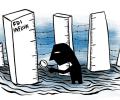
Net foreign direct investment (FDI) remained negative in November 2025 for the third consecutive month, mainly due to high repatriation, the Reserve Bank of India (RBI) said in its January bulletin.

The Reserve Bank of India's 2024 norms for the voluntary conversion of Small Finance Banks (SFBs) into universal banks, particularly the subjective 'diversified loan portfolio' criterion, are proving to be a significant hurdle, with Ujjivan SFB and Jana SFB having their applications returned.

Indian banks are urging the Reserve Bank of India (RBI) to reconsider its new $100 million cap on net open foreign-exchange positions, warning that the directive could lead to significant mark-to-market (MTM) losses and force an accelerated unwinding of trades, potentially impacting FY26 earnings.

The Supreme Court has ruled that borrowers are not entitled to a personal hearing before banks classify their loan accounts as "fraud" under RBI directions, clarifying that a written response to a show-cause notice and access to the forensic audit report (with redactions) are sufficient for natural justice.

The Indian rupee weakened against the US dollar due to rising crude oil prices, geopolitical tensions in the Middle East, and foreign fund outflows.
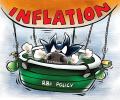
The Indian government has extended the Reserve Bank of India's (RBI) mandate to maintain retail inflation at 4 per cent, with a tolerance band of 2 per cent on either side, for another five years until March 2031.

India is the second-most-preferred destination among chief executive officers planning international investments - up from the fifth spot last year, according to PwC's 29th Annual Global CEO Survey released on Tuesday. The United States is their first choice.
Six banks that reported their quarterly business updates for the October-December (Q3FY26) quarter on Friday recorded double-digit growth in their loan books compared with a year ago. Deposits also posted healthy growth during the period.

Business confidence in India Inc rose to a five-quarter high in December quarter of FY26, amid further reform expectations and steady domestic demand, a survey by industry body Confederation of Indian Industry (CII) showed. The CII Business Confidence Index (BCI) rose for the third consecutive quarter to 66.5 in the December quarter from 66 in the preceding September quarter.

The easing of external commercial borrowing (ECB) norms by the Reserve Bank of India (RBI) is expected to significantly boost overseas fundraising by Indian companies, market participants said.
